Subject: 18k Gold Titanic Sovereign Instrument discovery
DATE: ARCHIVED 2026
FILE NO: L-J-1912-AUDIT
Most high-profile artifacts rely heavily on an anecdotal oral "chain of custody"—a sequential list of personal accounts documenting custody handovers over a century. If a single node within that chain is compromised by error or misremembering, the integrity of the provenance degrades entirely. This dossier, published via titanicpocketwatch.com, functions on a different paradigm: a convergent network of independent, unalterable historical documentation (parish logs, federal census entries, maritime manifests, and physical horological hallmarks) that mathematically intersect at a single point of origin. For this data configuration to occur by mere coincidence, a dozen entirely separate administrative systems operating across Sweden, England, and the United States would have had to execute identical data anomalies in the exact same mathematical and alphabetical sequence in April 1912. This alignment differentiates a historical curiosity from verifiable forensic proof. This pristine 18k open-faced woman's pocket watch provides the structural material evidence required to correct 114 years of accepted Titanic-related genealogy and history regarding multiple Swedish passengers. It physically documents the transition of the Johansson family from Sweden to North America in April 1912, while establishing the parameters of an advanced administrative identity mapping sequence executed prior to departure.

To the prospective future custodian,
We are opening the opportunity for the acquisition of a highly significant Titanic maritime artifact. The empirical data points established in this repository are derived directly from the physical engravings isolated within the watch's casing. The chronological mathematics underlying this provenance analysis are structurally verified and irrefutable. The Independent Transatlantic Archive Consortium presents the following comprehensive archive, integrating forensic and photographic analysis of a singular historical asset: an 18-karat gold woman's open-face pocket watch assigned to survivor Elisabeth Wilhelmina Johansson (nicknamed Elsie). This instrument was presented to her to mark her 21st birthday on April 4th, 1912, and to commemorate her upcoming transatlantic crossing to the United States—just six days before boarding the R.M.S. Titanic at Southampton. Its historical significance is anchored to her survival of the maritime disaster on April 15th, 1912, and the subsequent documented execution of an identity transition matrix tied to the Mansion House Titanic Relief Fund (MHTRF) parameters. Given its direct connection to the events of 1912 and the verified Hedvig Eleonora Parish lineage, we seek a prospective steward who recognizes the historical weight of this heritage.
Item Description:
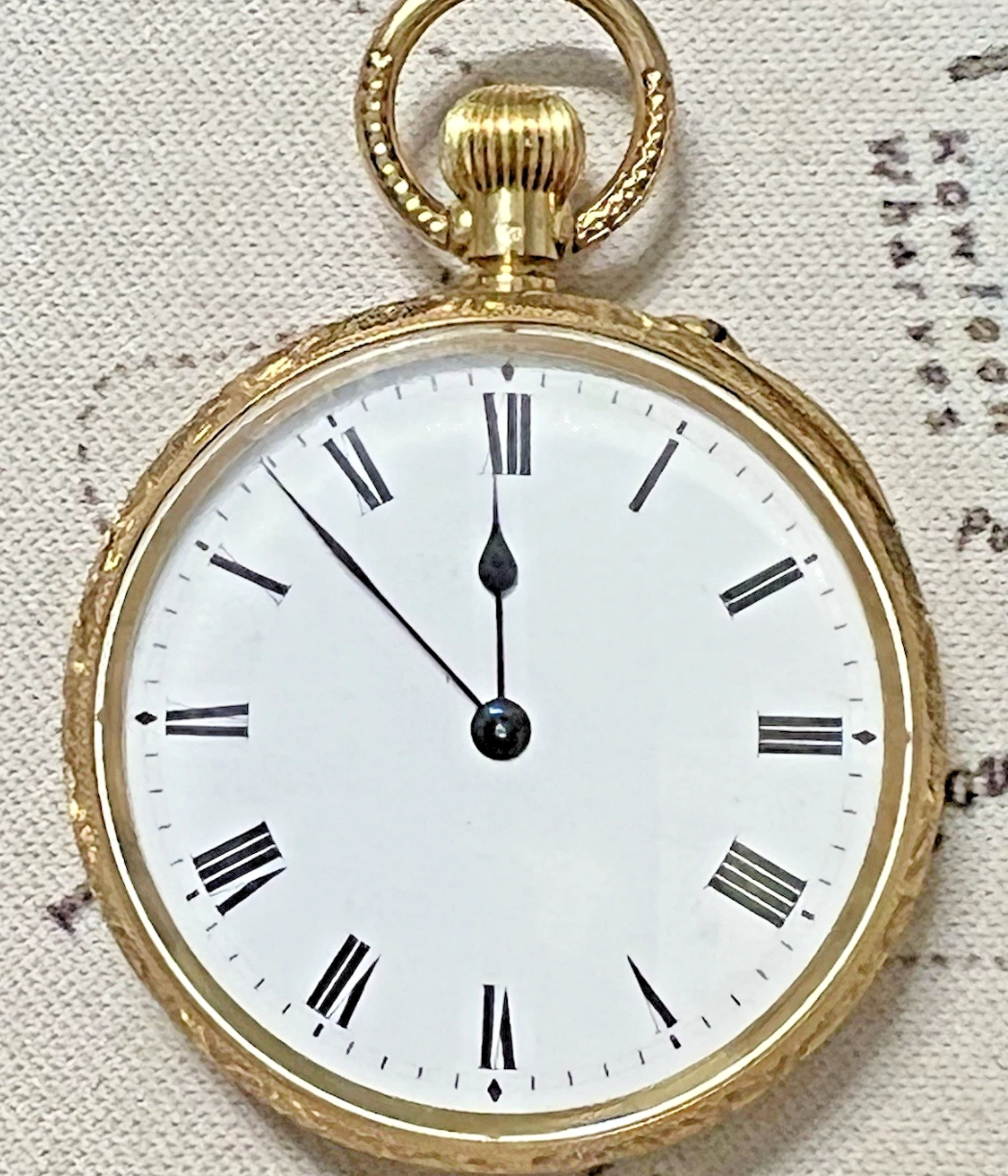
18-Karat Gold Titanic Survivor Pocket watch
Type:
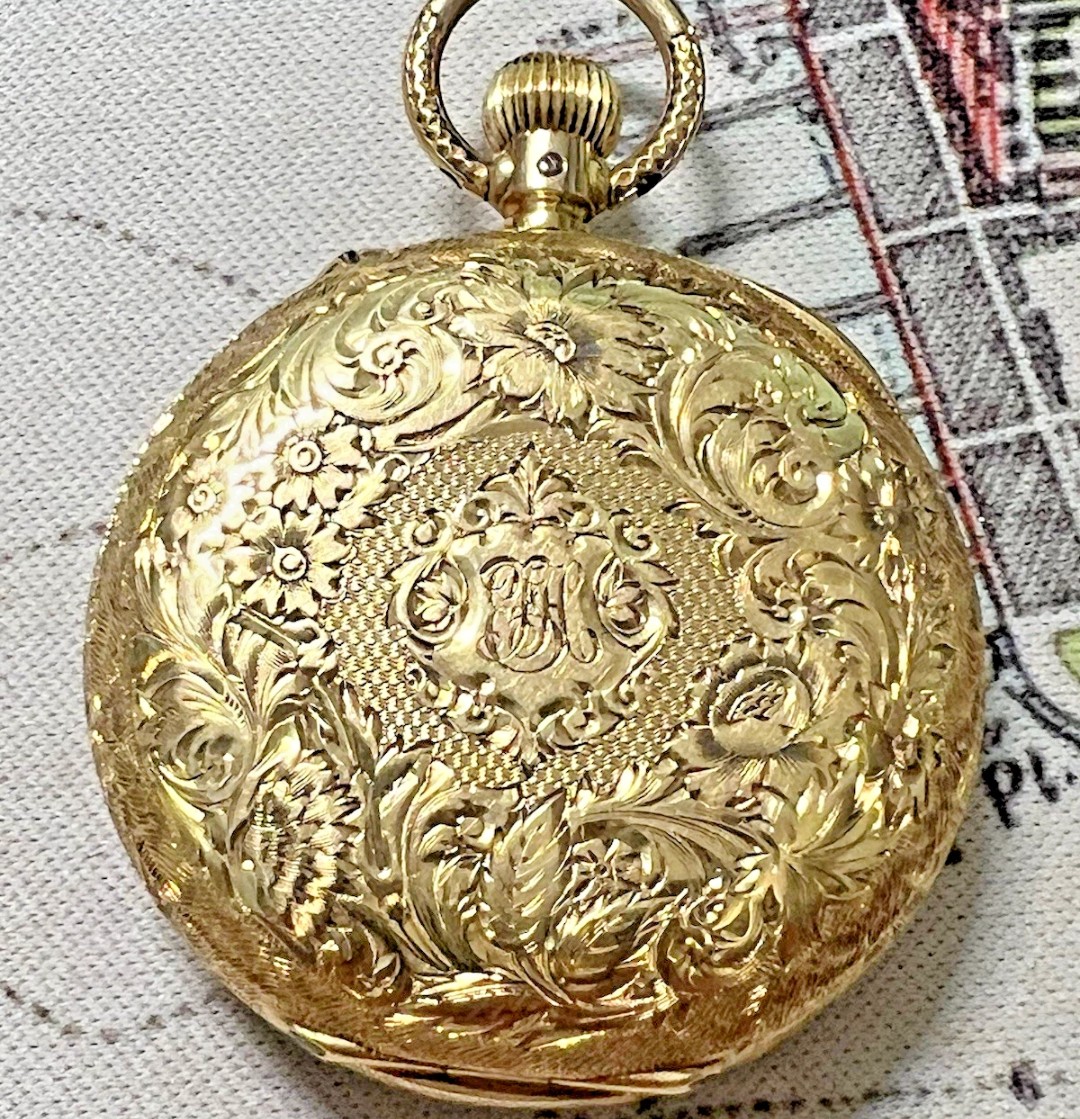
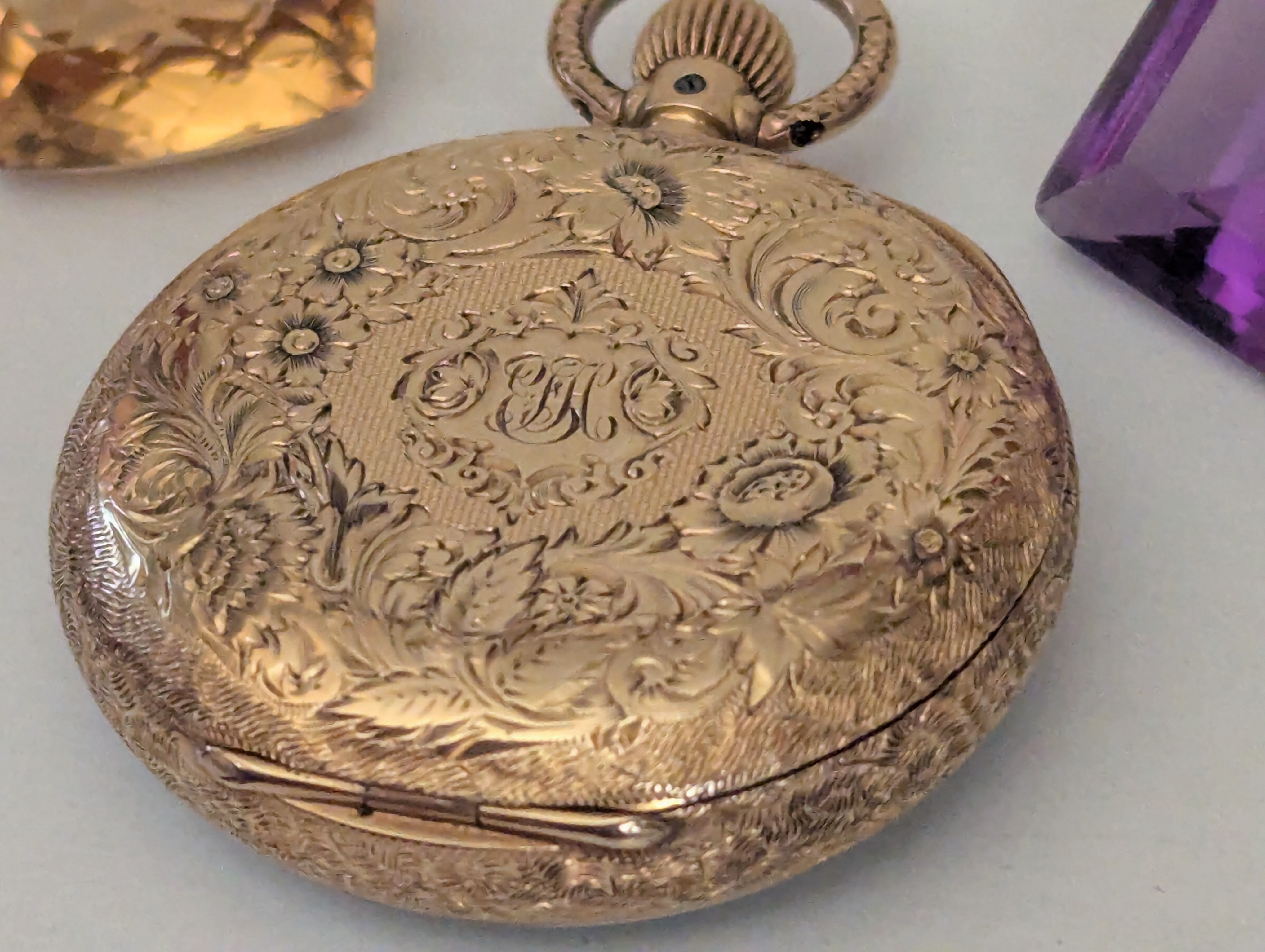
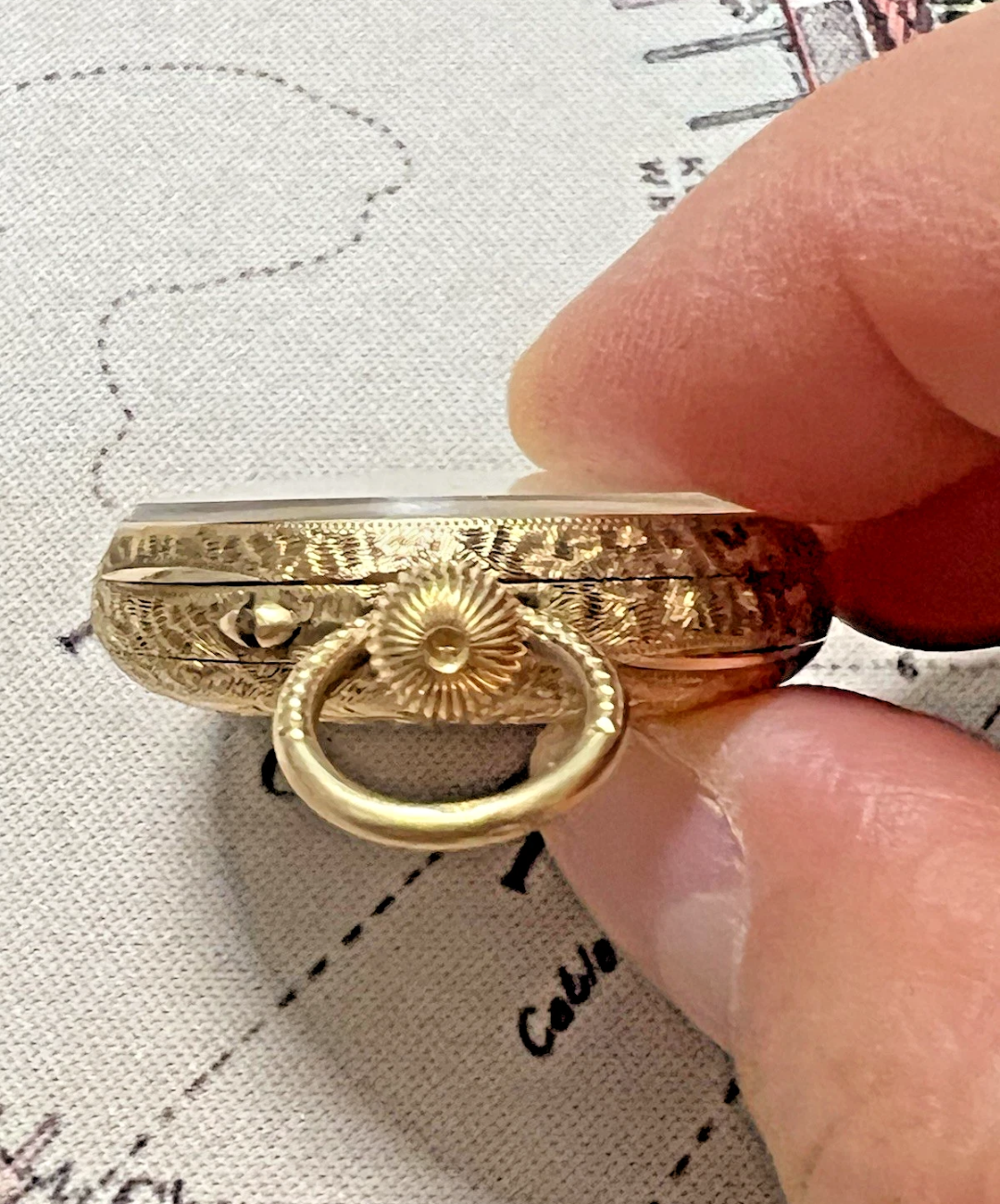
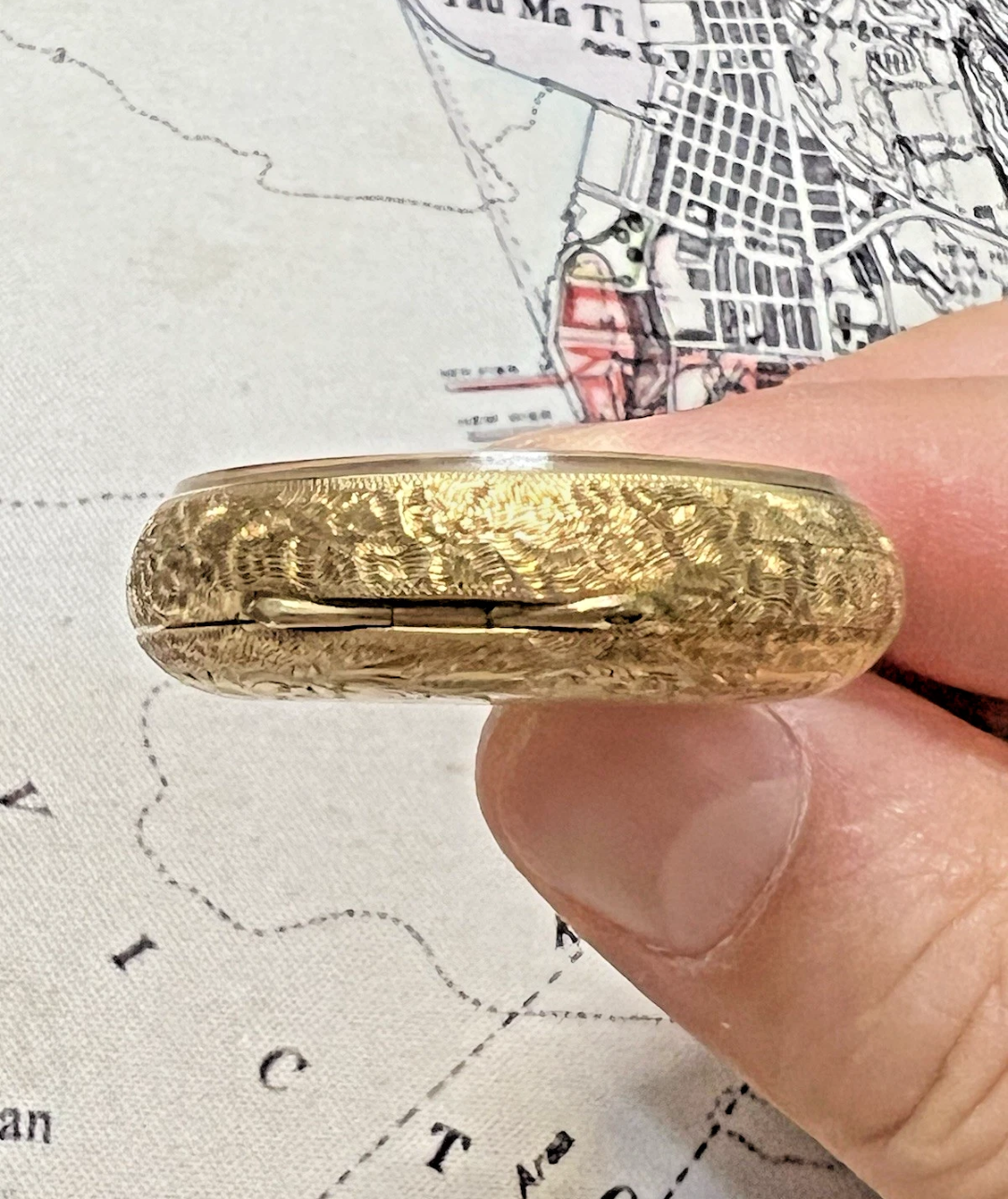
Woman's open-face pocket watch with formal floral foliate engraving.
Material/Hallmarks:
18-karat solid Swiss gold, displaying the definitive 18K Hallmark, the 750 gold purity Hallmark, and the official Swiss Helvetia responsibility mark.
Movement:
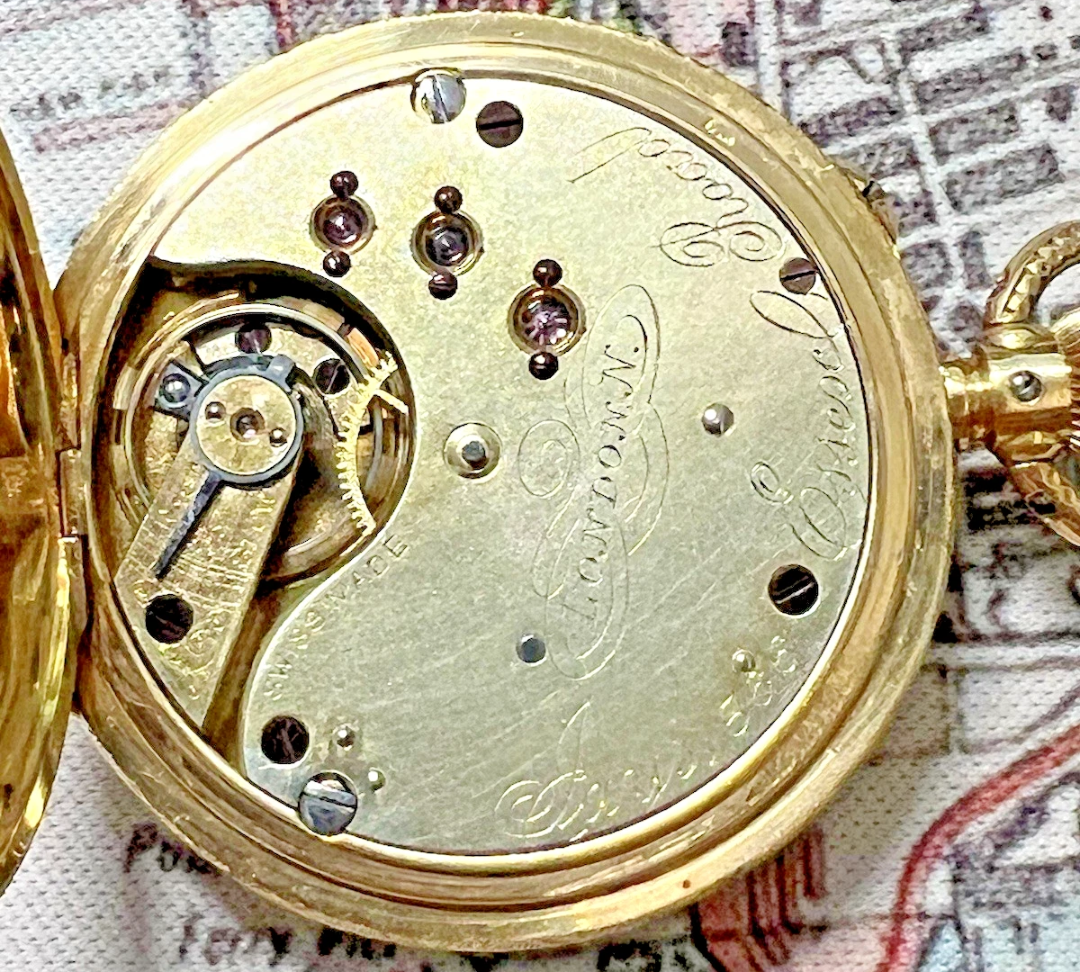
Omega manufacture movement, bearing the explicit custom retailer stamping "Jay's 366 Essex Road, London N." directly on the movement plate.
Case Maker:
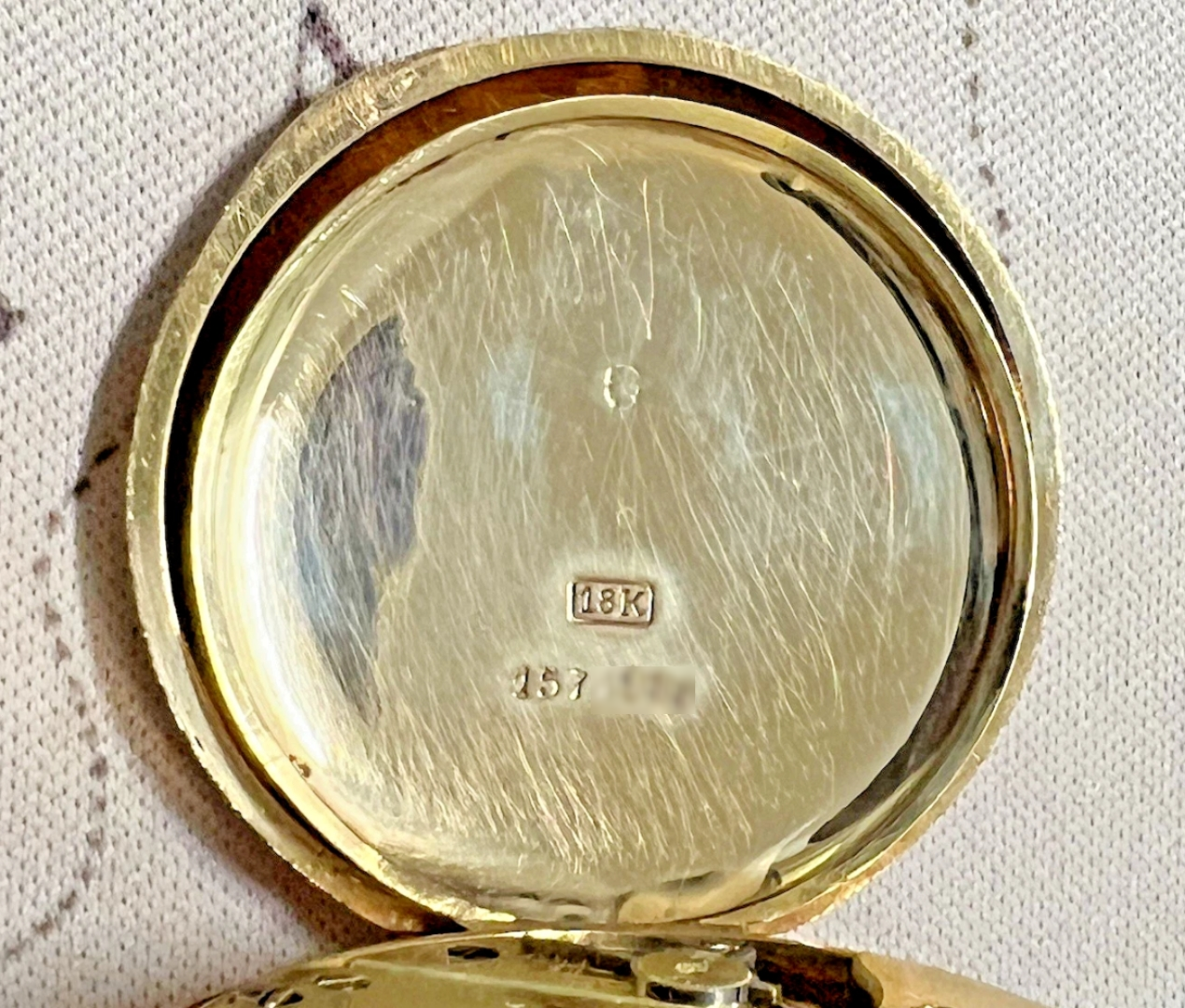
Arthur Baume ('AB' cartouche), confirming the premium Swiss case and movement assembly was customized and retailed within the British domestic market. Case serial number is 457****.
Engravings:
EJA initials hand-engraved on the exterior reverse shield. Hand-etched factory Omega insignia and corresponding serial numbers executed inside the case back.
Personal Engraving:
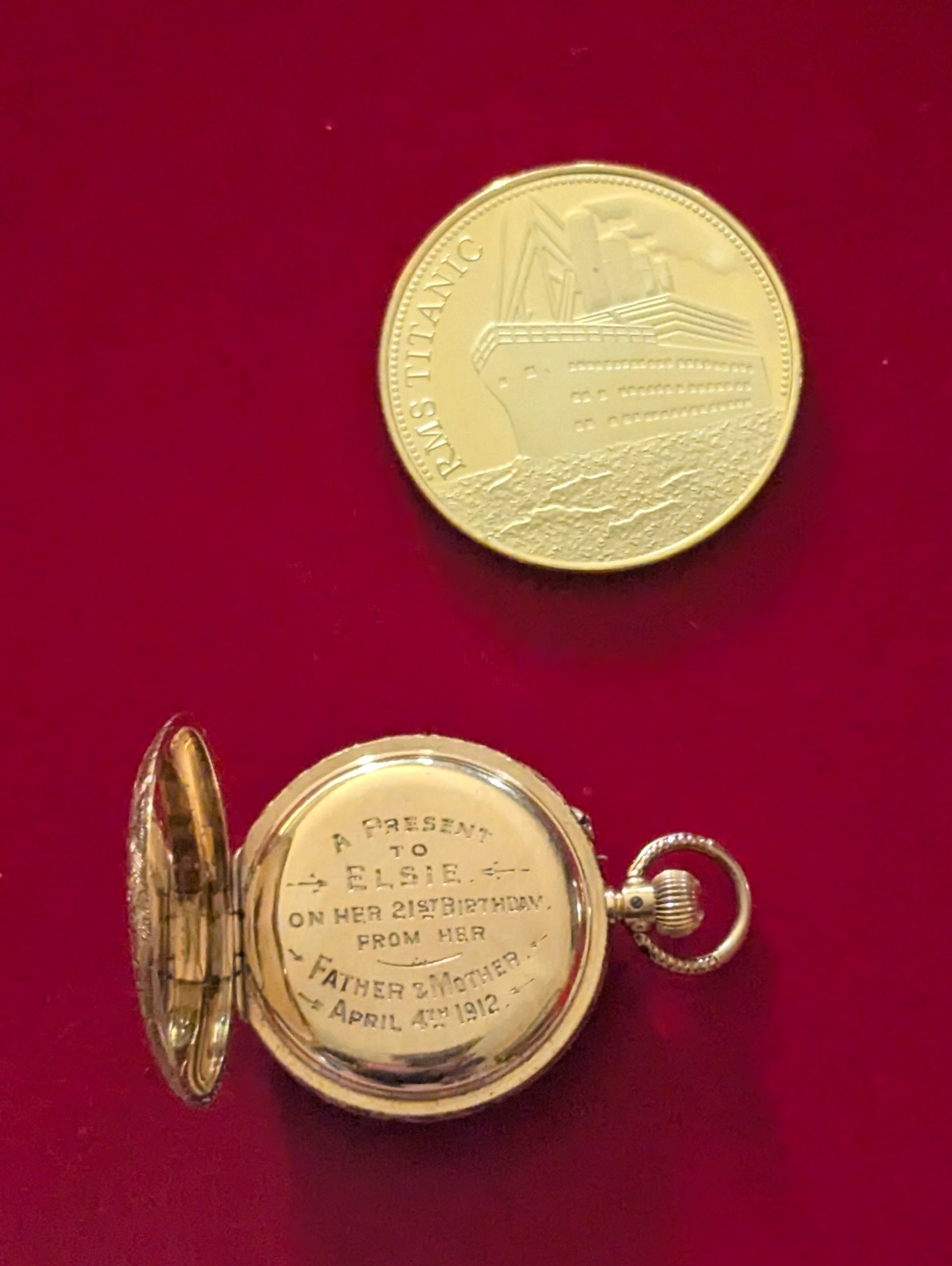
Interior cuvette: "A present to Elsie on her 21st birthday from her father & mother, April 4th, 1912".
Retailer/Jeweler:
Jay's of 366 Essex Road, London N., historically documented as watchmaker and instrument supplier to the British Admiralty.
Condition:
Pristine archival condition, fully functional with excellent mechanical amplitude.
Research Summary or Provenance Analysis
The concentration of specific administrative and personal data engraved directly into this watch is virtually unique for timepieces of the early 20th century. To have these disparate data nodes hand-engraved onto a single physical asset represents a statistical anomaly that elevates the timekeeper from a luxury accessory to an unalterable physical key of identity:
The Tri-Layer Identification Matrix: This watch carries the exterior EJA monogram, an internal 21st-birthday presentation engraving tracking to the exact date (April 4th, 1912), and the familial nickname "Elsie"—aligning completely with the family's internal Swedish records.
Movement-Plate Customization: Etching the retailer's physical address ("Jay's, 366 Essex Road") directly into the steel movement plate represents an elite, high-cost tier of customization. During an era where retailers sought prominent external branding to drive repeat business, hard-coding the geographical origin of the instrument directly into the mechanical infrastructure provided an unalterable signature of provenance.
The "Physical Key" Theory: This high density of data—mapping birth date, initials, localized nickname, and specific British retail geography into solid gold—functions as an intentional fail-safe. In the event that paper travel documentation or identification was destroyed or intercepted during migration, this watch served as the immutable "Master Record." It stood as the physical embodiment of the owner's legal and familial history, designed to withstand the hazards of transatlantic transit and provide irrefutable proof of identity.
The Jay’s of London Forensic Link: The Admiralty Node
The retail premises at 366 Essex Road, established in 1862 and still standing today in Islington, functioned as a premier center for high-value asset management and Admiralty-certified horology. For individuals structuring a permanent relocation from Europe to North America, Jay’s served an important logistical role. In an era preceding automated international identification networks, converting liquid capital into high-karat solid gold—specifically via durable, highly identifiable assets—offered a secure method to navigate international customs filters. Relocating families could declare modest cash reserves while carrying their core generational wealth securely on their person, insulated from theft, volatility, or administrative interference. Jay’s held the distinct status of watchmaker to the British Admiralty, placing the firm in the highest tier of municipal security. Securing an Omega movement retailed and marked by Jay's was the 1912 equivalent of utilizing a secure sovereign banking vault.
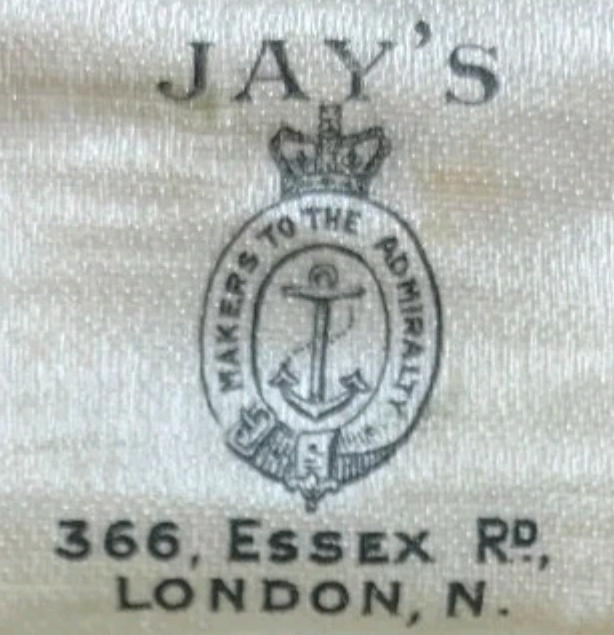
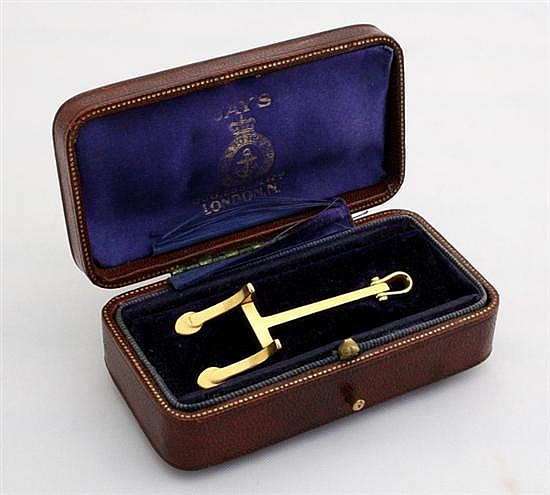

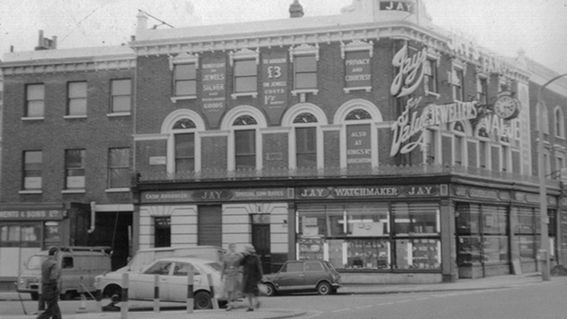
Storefront Chronology: High-resolution archival tracking verifying the continuity of 366 Essex Road through time. Upper left: The original historic facade of Jay's of London operating as the premier Admiralty jewelers and watchmakers. Upper right and lower left: The physical structure as it stands today, repurposed as the Islington Inn, anchoring the exact geographical coordinate of the transatlantic funding node. Lower right: Surviving material culture authenticated to the identical Admiralty retail origin.
The Auction Data:
Item: A miniature 18k gold pivoting maritime anchor retailed in its original fitted presentation case from Jay’s, 366 Essex Rd, London. Engravings: Professionally engraved on the shank with "R.M.S. CARPATHIA / APR. 15 1912". Market Value: This 1.5-inch commemorative anchor (Lot 155) sold via Charles Miller Ltd for £2,356, with comparable pieces valued between £3,000 and £4,000 at specialized maritime sales.

The Physical Connection:
This commemorative anchor provides undeniable material proof that Jay’s of London—the Watchmaker to the Admiralty—was the specific jeweler utilized for elite, custom Titanic-related commissions in April 1912. The fact that this artifact shares the identical 366 Essex Road retail mark with the Elisabeth Johansson pocket watch demonstrates that both instruments were processed through the same high-security Admiralty node during the same historical window.
Provenance: Elisabeth Wilhelmina Johansson
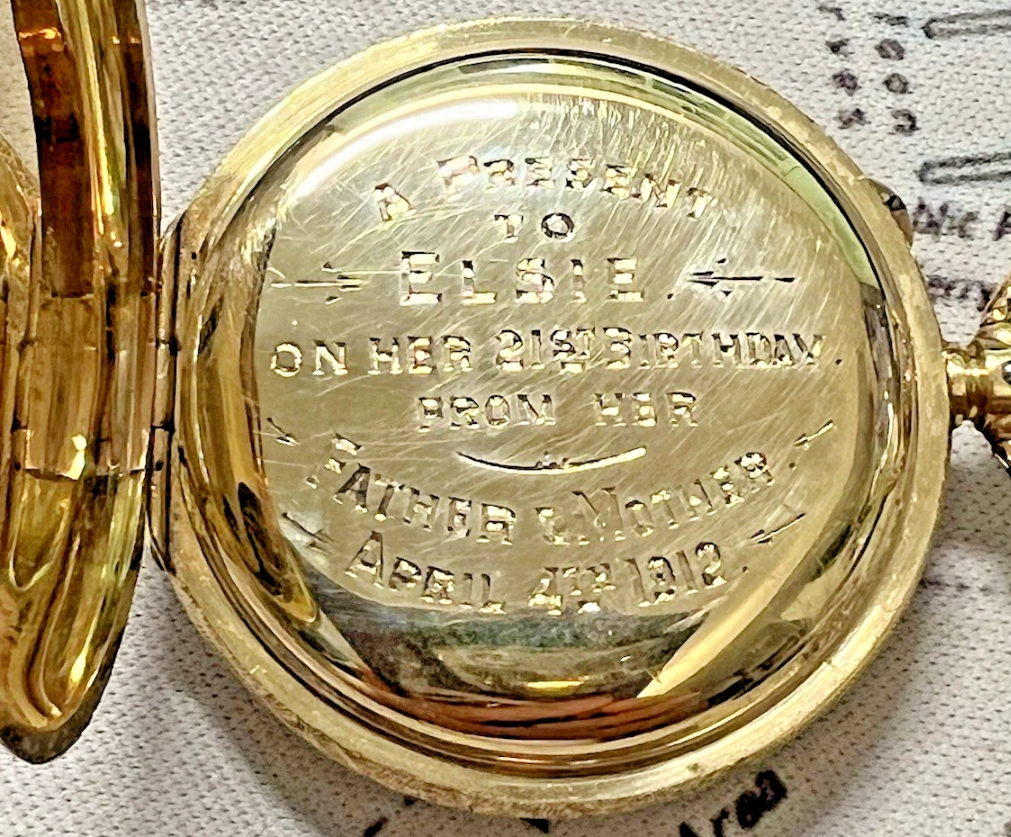
The internal engraving celebrating her 21st birthday on April 4th, 1912, aligns precisely with the 1891 birth record preserved within the Stockholm City Archives, Hedvig Eleonora Parish, Sweden. The watch acts as an immutable material anchor of her original legal identity. Furthermore, her daughter, Eleonora, was named after her mother Elisabeth's birth parish, Hedvig Eleonora, and both mother and daughter were known by the nickname "Elsie," which is engraved on the watch.
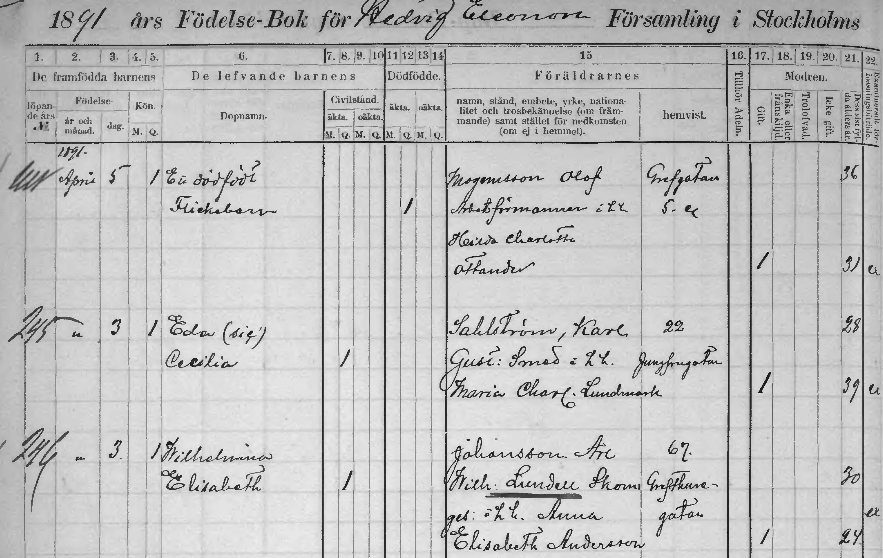
The custom monogram “EJA” reads directly as Elisabeth Johansson Andersson. This monogram ties all three initials back to the 1891 Hedvig Eleonora Parish birth record, which identifies Elisabeth's mother as Anna Elisabeth Andersson and her father as John Lundell.

The Genealogical Foundation: Advanced genealogical tracking isolates the core family unit anchored by Anna Elisabeth Andersson and John Lundell. Their presence within the 1911 Sweden Census records (Rotemansarkivet) in the Hedvig Eleonora district physically links them to Sweden. Concurrently, Harold and Eleanora are documented in Kisa Parish under their biological mother Alfreda Andersson at the Kisa Parish address just one year before the voyage, diverging from later administrative alterations.
Owner History: The watch remained strictly within the personal possession of the survivor, Elisabeth Wilhelmina Johansson, throughout her life until her passing in 1984. Following her death, the asset moved quietly through the estate structure before re-emerging on the open market, where its unique historical markings and case stamps were forensically isolated and identified by our Horological Unit.
Analysis of Administrative Divergences and Historical Significance
The primary value of this timepiece is its utility as a physical benchmark to evaluate inconsistencies in the official survivor record, uncovering a significant historical multi-mapping event:
The Record Divergence: Encyclopedia Titanica and secondary compilations identify Aliina Vilhelmina Backberg as the surviving entity, an identity showing significant data integration with the historical record. Our research demonstrates that the physical survivor tracks to Elisabeth Wilhelmina Johansson. This is supported by the official Titanic passenger manifest, which records her boarding as Elis. Johnson alongside two children, Harold and Eleanora, immediately adjacent to the ticket entry for her father, John Lundell, traveling within the identical ticket group.
The Documentary Evidence:
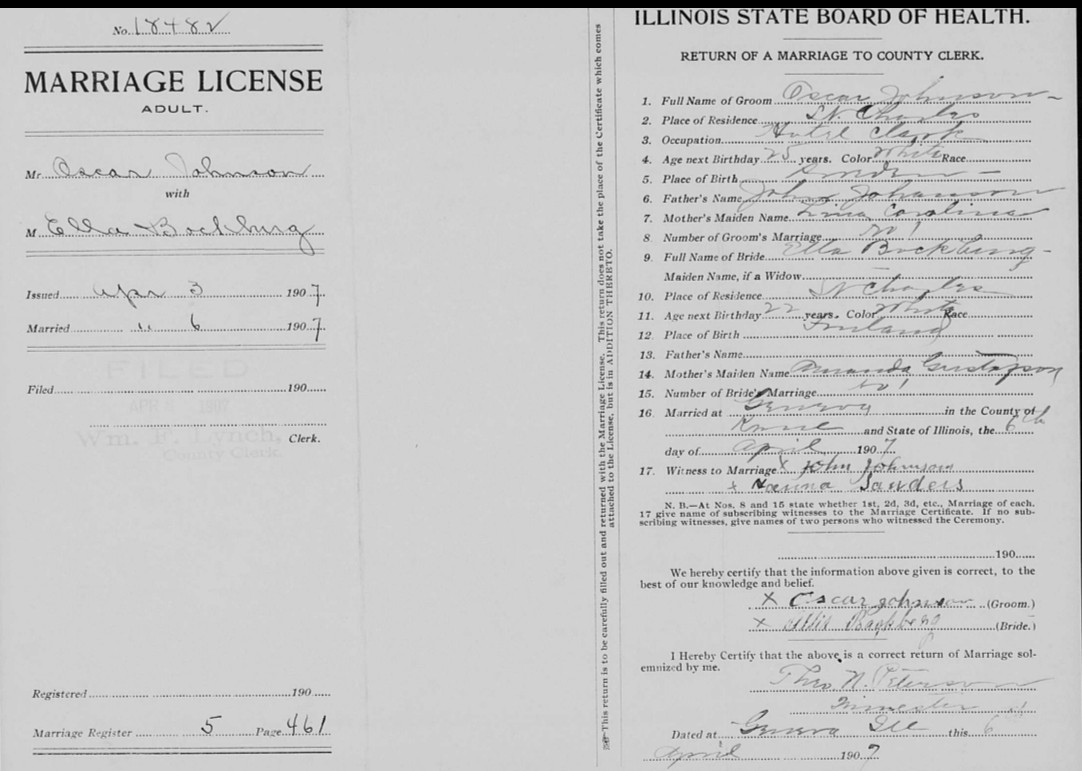
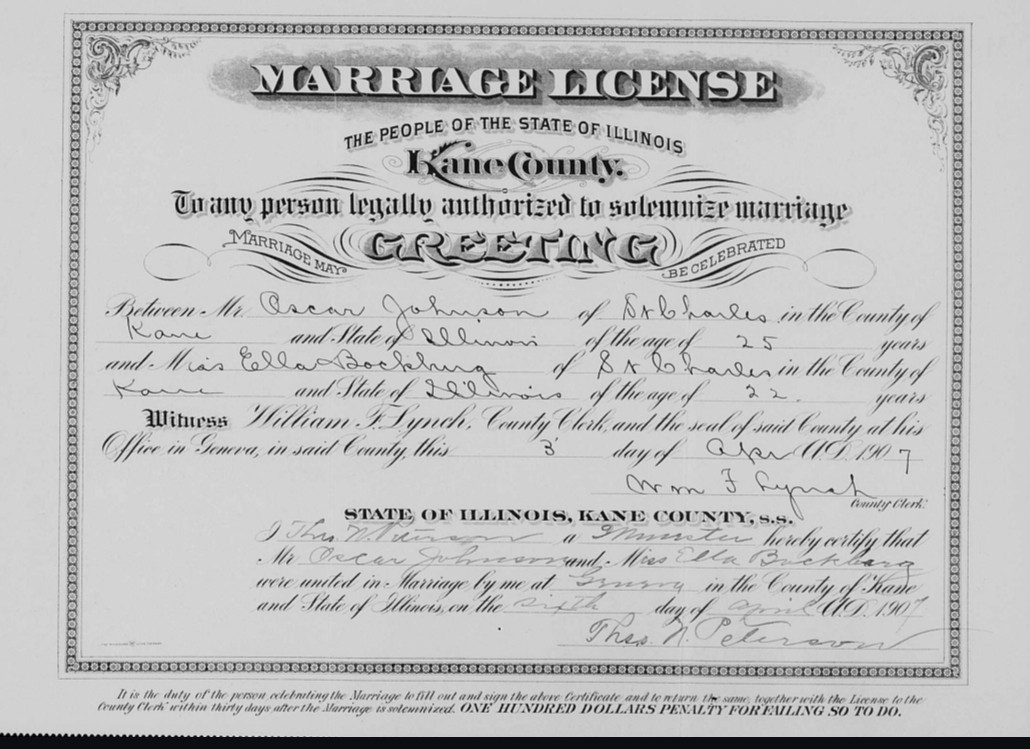
Documentary Control Trends: Records indicate an established trend of strategic document management dating back to her marriage registration with Oscar. This pattern of administrative oversight—documented in the 1907 marriage filings shown above—provides essential context for the complex identity tracking observed following the maritime disaster.
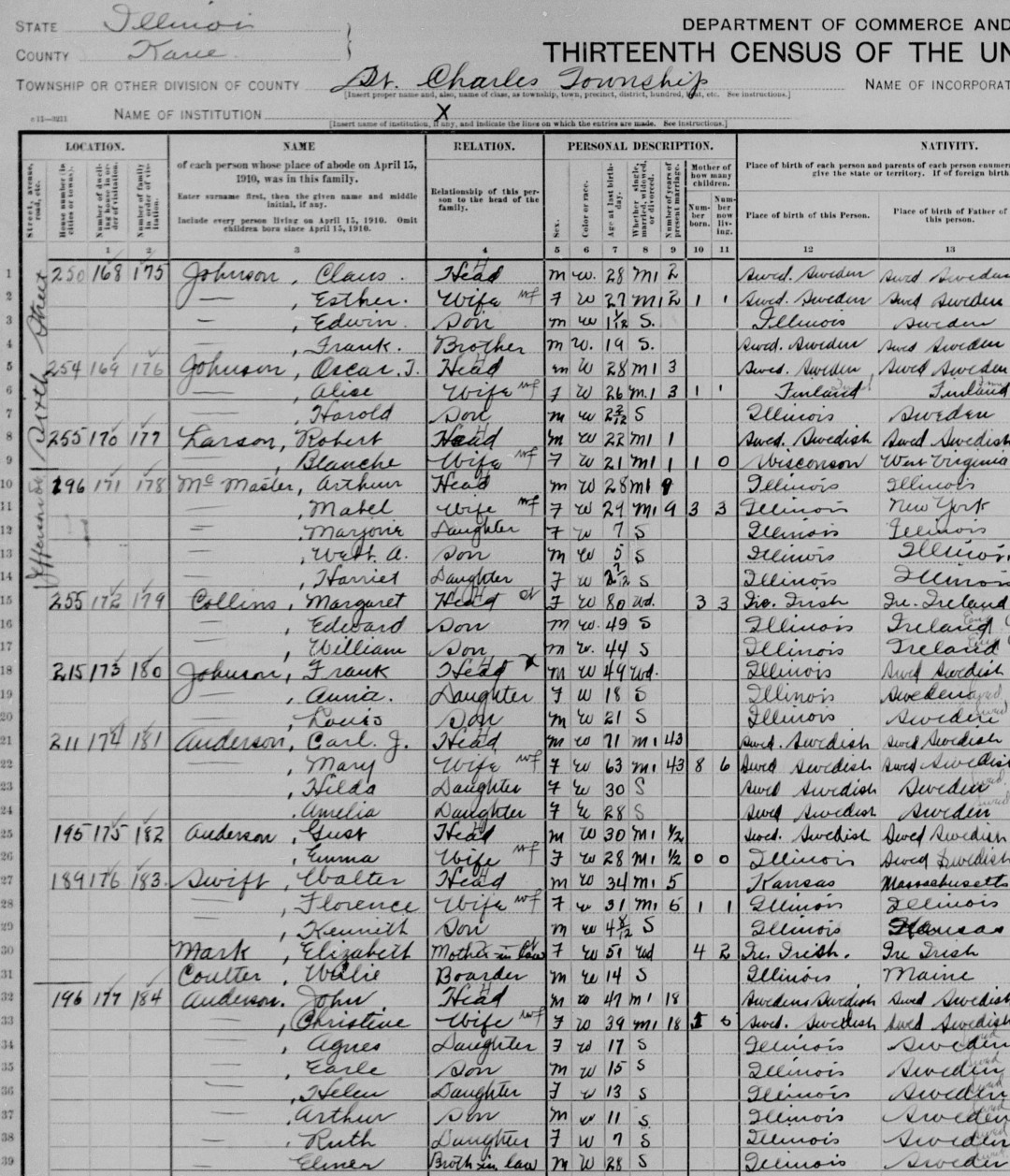
Pre-Established Identity Architecture: While historical tracking indicates the physical family was not present in the United States prior to 1912, complete family identity profiles had been pre-established within the administrative records of St. Charles, Illinois. The 1907 marriage filings were recorded to secure a pre-seated legal framework in advance of the transatlantic crossing. The registration was executed precisely at Elisabeth's 16th year to comply strictly with local statutory age requirements, preventing administrative flags. This provided an instant, functional legal history upon their arrival in the Midwest.
Midwestern Administrative Structuring: Consequently, the domestic documentation generated for the minors functions as pre-seeded administrative profiles. The biological lines track directly back to Sweden, identifying them within the family of Anders Johan Andersson and Alfrida Andersson. The two youngest children from that lineage were administratively mapped to Elisabeth Wilhelmina on paper: the boy utilizing his middle name, Harold, and the girl utilizing her first name, Ellis. This reassignment provided the necessary legal structure for custody confirmation. Following the loss of the original family unit at sea, these profiles were cleared for long-term domestic institutional integration.
The Document Contradiction: The Aliina assignment faces structural issues, as official records indicate a prior marriage to Karl Victor Neffling. This directly diverges from the marriage certificate of Elisabeth and Oscar, which explicitly records it as Elisabeth’s (Ella Bockberg) 1st marriage.
The Manifest Anomalies: The passenger manifest displays unusual properties, showing two separate entries for "Oscar Johnson" on board the Titanic, while a third "Oscar Johnson" was simultaneously listed as a resident waiting in St. Charles, Illinois. This multi-layered data footprint indicates a coordinated tracking of the surname across three geographic nodes simultaneously. When evaluated alongside the Andersson lineage, the administrative logic of this multi-tiered framework becomes clear. Rather than a simple clerical error, this represents a calculated structural convergence designed to anchor a legal framework on both sides of the Atlantic prior to physical arrival.
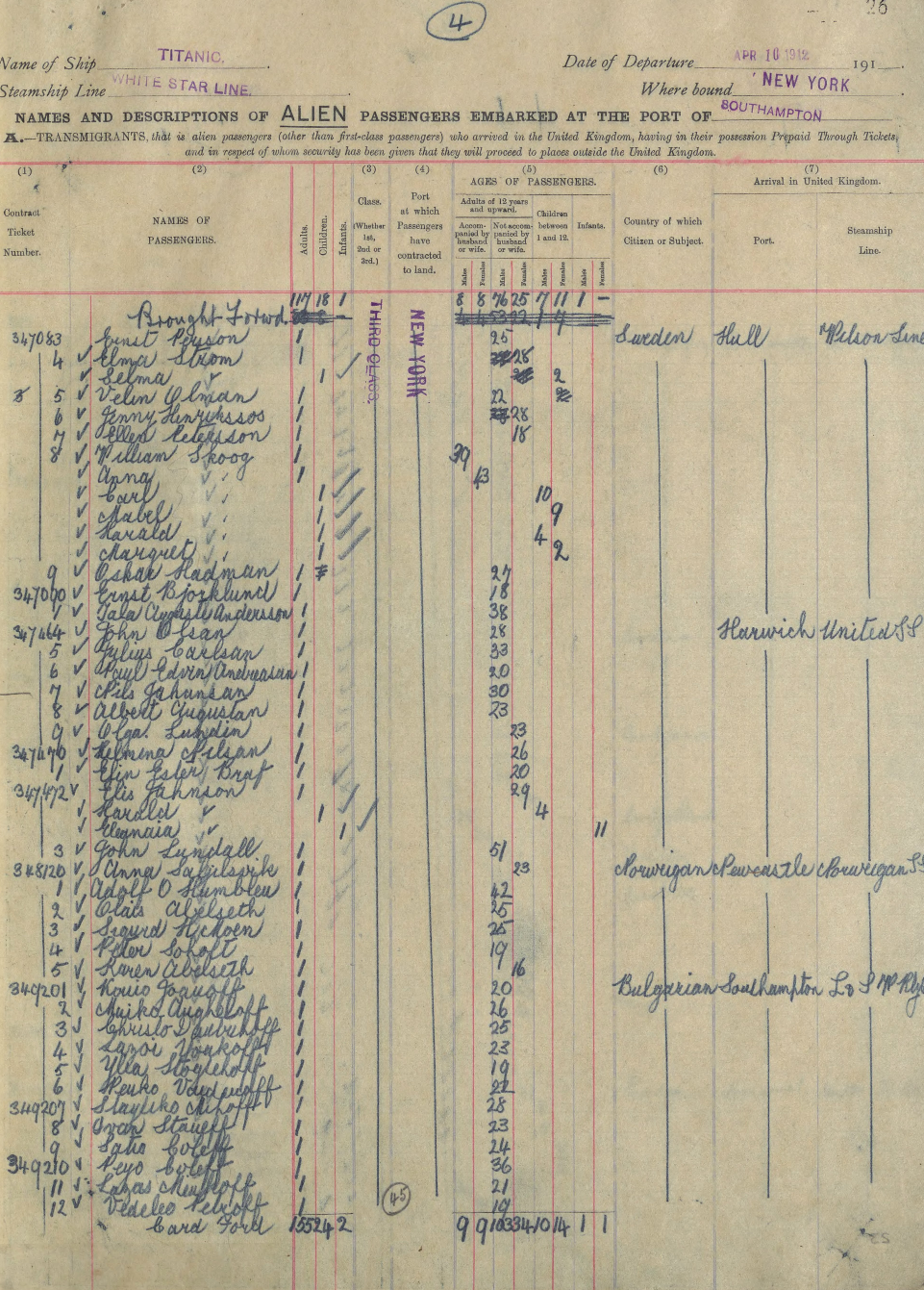
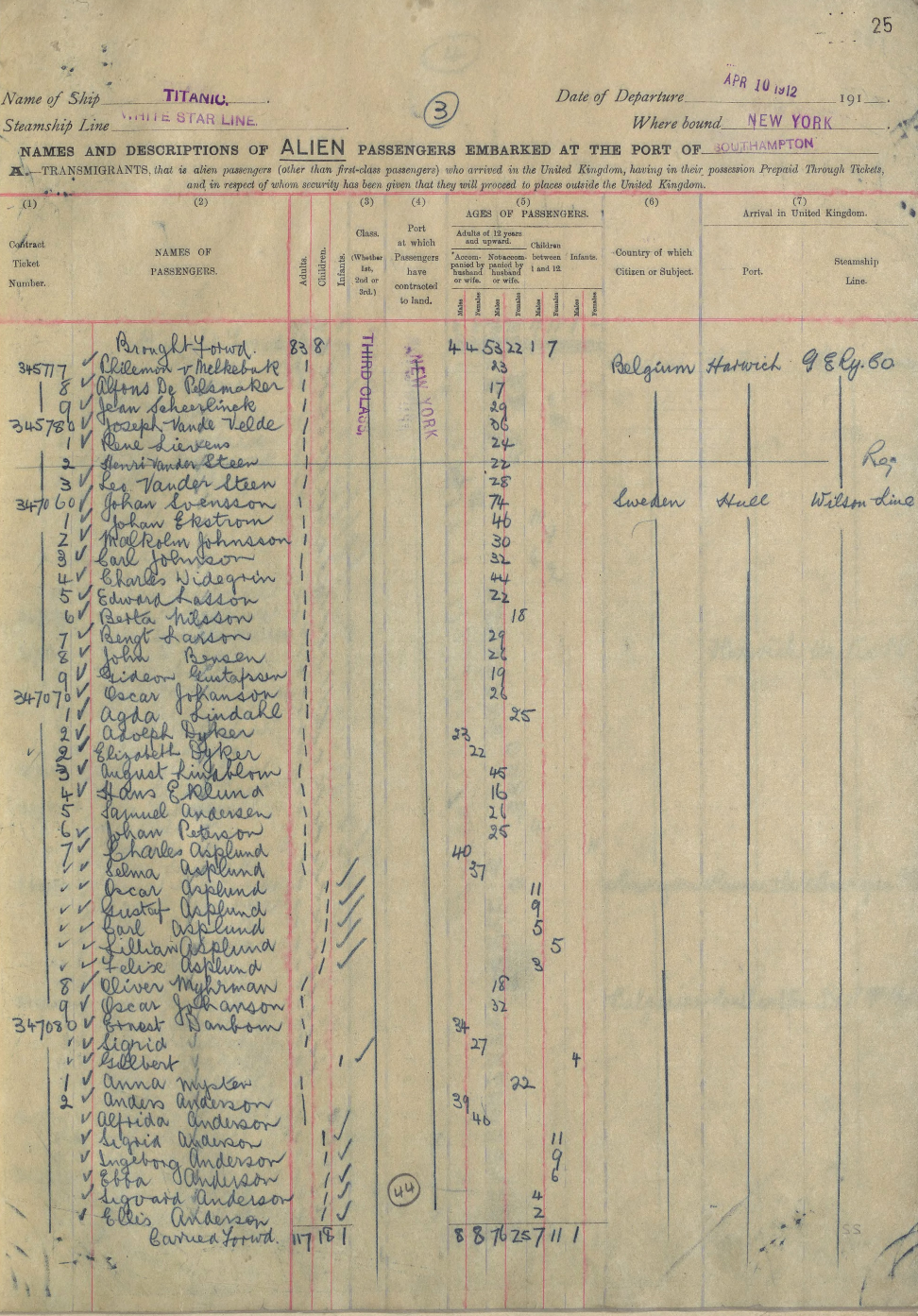
Verifiable Familial Tracking: The Titanic manifest demonstrates that Elisabeth was registered under booking ticket number 347472. The entry immediately following her position belongs to John Lundell, confirmed via Swedish archives as Elisabeth's father. This co-traveler status is mathematically validated by chronological tracking: his age is listed as 30 on Elisabeth's 1891 birth record, and precisely 21 years later on the 1912 Titanic manifest, his age is recorded as 51. This perfect mathematical convergence makes the probability of an accidental correlation statistically negligible.
The 1911 Sweden Census (Rotemansarkivet) documents this identical family unit in Stockholm. Elisabeth is recorded as 20 years old on this census, matching both the Hedvig Eleonora parish record and the pocket watch inscription precisely. This census outlines the full family structure: Elisabeth, her mother Anna Elisabeth Andersson, and her father John Lundell. Crucially, contemporary parish indexes place the children, Harold and Eleanora, within the family's immediate sphere at the Kisa Parish address one year prior to departure.
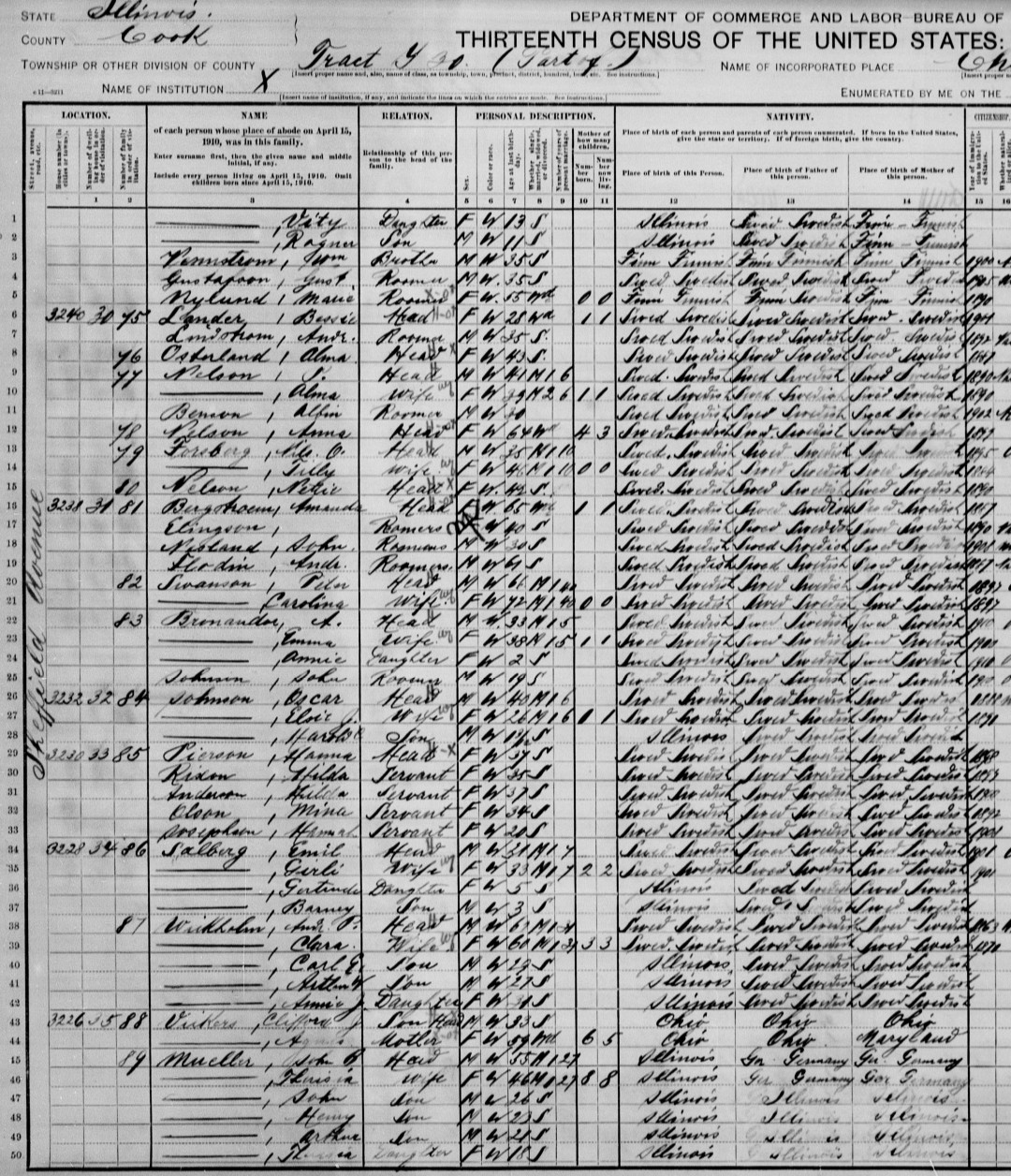
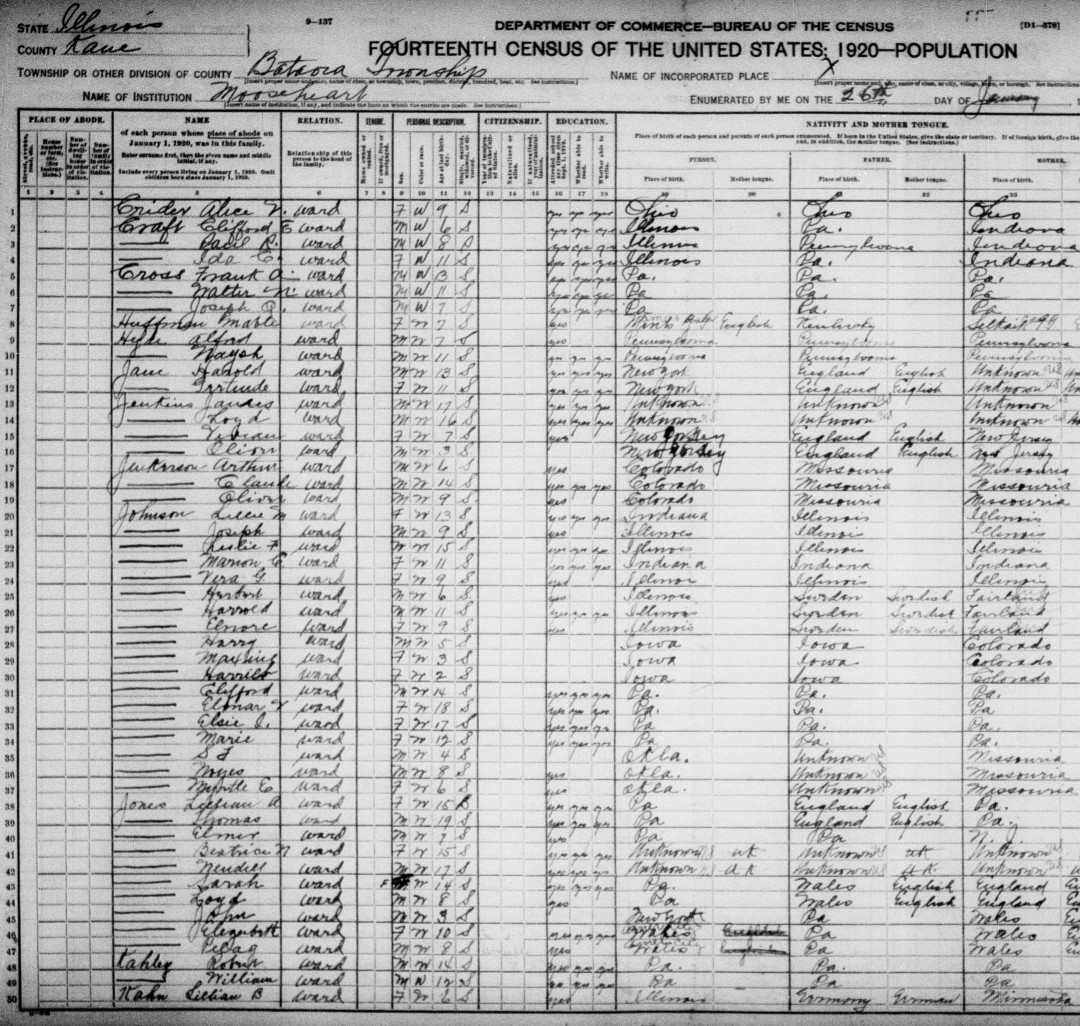
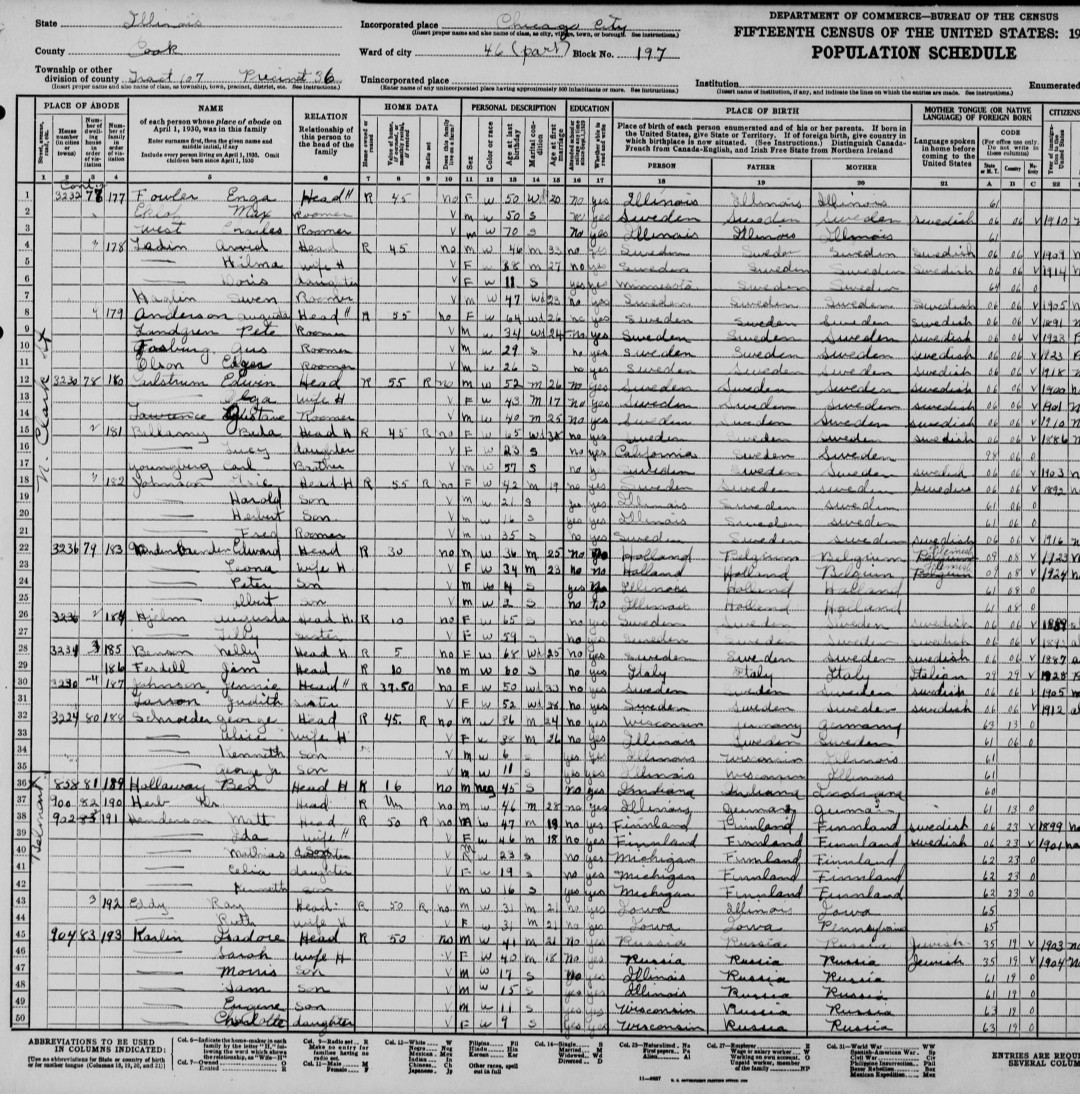
The SVEA Land Company: The Engine of Transition
An essential operational component of this migration tracking is the SVEA Land Company. Archival records verify that an Oscar Johnson directed the company during its foundational expansion phase. Working in conjunction with John Lundell, this enterprise functioned as a secure gateway—providing arriving Swedish nationals with real estate holdings, immediate local legal standing, and the institutional framework required to integrate into the American Midwest. This setup explains the utility of the pre-seated 1907 administrative framework. The family’s direct association with the SVEA Land Company explains how they successfully navigated the transition from their original Swedish profiles to the established "Johnson" household in St. Charles without triggering standard federal immigration filters.
Archival Analysis of Maritime Relief Fund Disbursal

Analysis of the official Mansion House Titanic Relief Fund (MHTRF) ledgers formally records the long-term financial management of the "Johnson" claimants, validating the continuity of the identity tracking. The ledgers document decades of continuous administrative oversight under the designated family name:
"In perhaps the most pieties case in the fund records, that of the Johnson family, Mrs Johnson (whose husband had been killed in the sinking) died of cancer in 1918... When it was discovered in 1949 that the sale of Mrs Johnson's effects had been banked in a Titanic fund account and had not been disbursed to her children, the local committee resolved to contact one of the 'feebleminded' daughters, May..." (Gregson, 2012, p. 97).
The Ledger Discontinuity: The specialized tracking of this account is further highlighted by the documented omission of MHTRF Book 2 from public access archives around 2014. This specific volume, which contains the granular ledger entries for the "Johnson" family claims, became unavailable precisely as digital forensic audits began to cross-reference these specific maritime accounts.

The archival records confirm that the allocation of these funds was structured as a long-term, multi-decade annuity plan requiring continuous bureaucratic administration from English oversight committees. This administrative continuity allowed for a long-term legal and financial framework to remain active across both sides of the Atlantic for decades following 1912.
Global Record: Christie's Valuation History
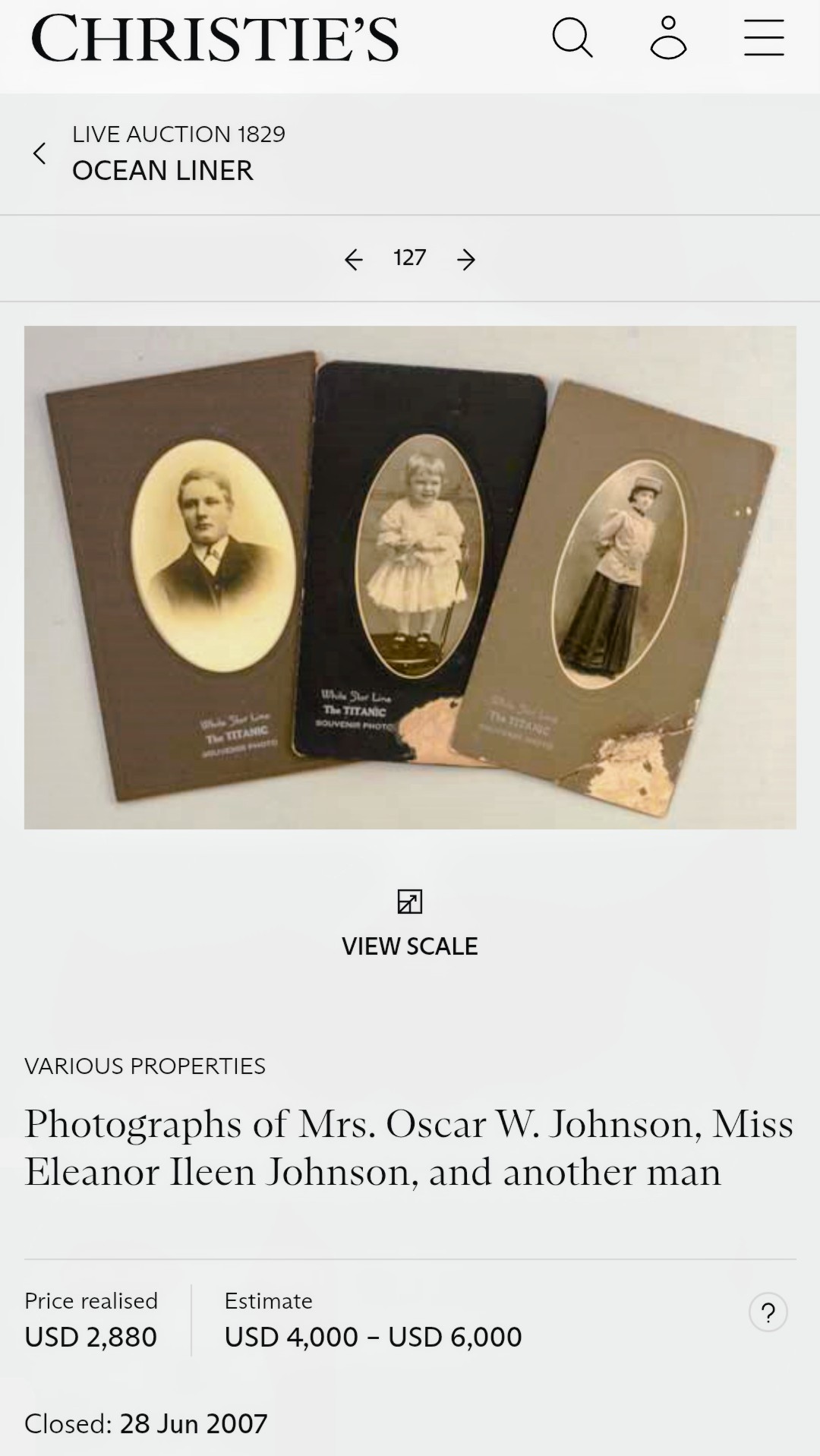
The documentation from the Christie's appraisal archive demonstrates that the global fine-art and asset valuation industry has long integrated the material culture of the St. Charles Johnson household into the verified record of primary Titanic history. These recorded artifacts serve as established markers confirming that the survivor provenance was consistently recognized and valued under this designation within high-tier maritime institutions.
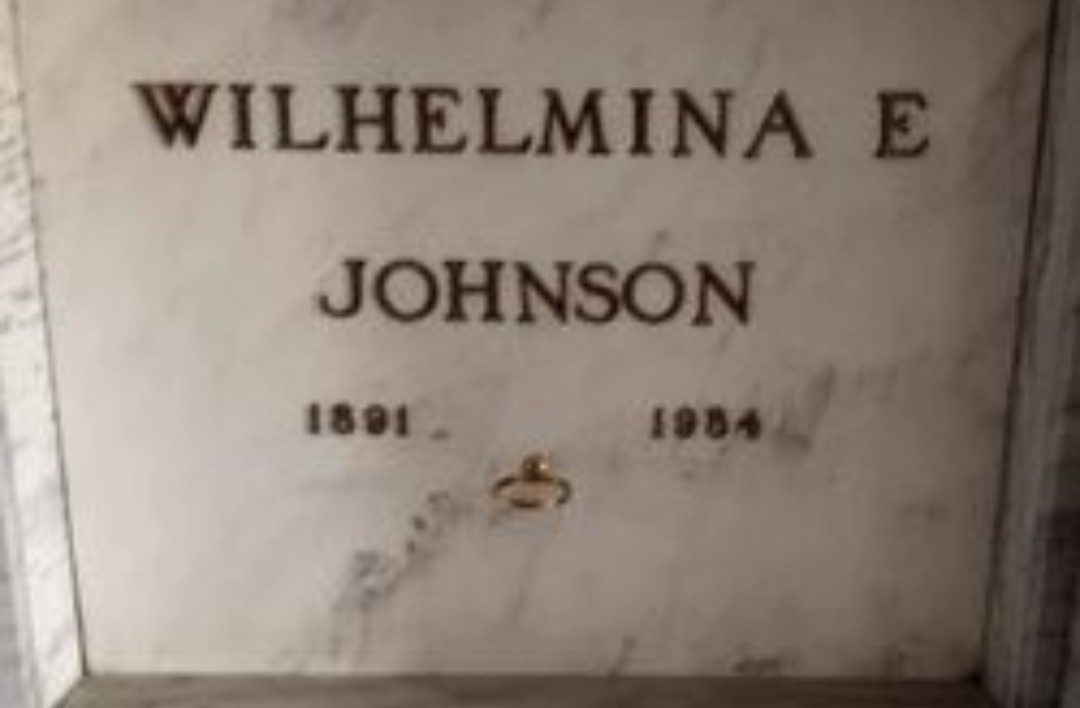
St. Charles Logistics: Post-Disaster Placement with John J. Daly
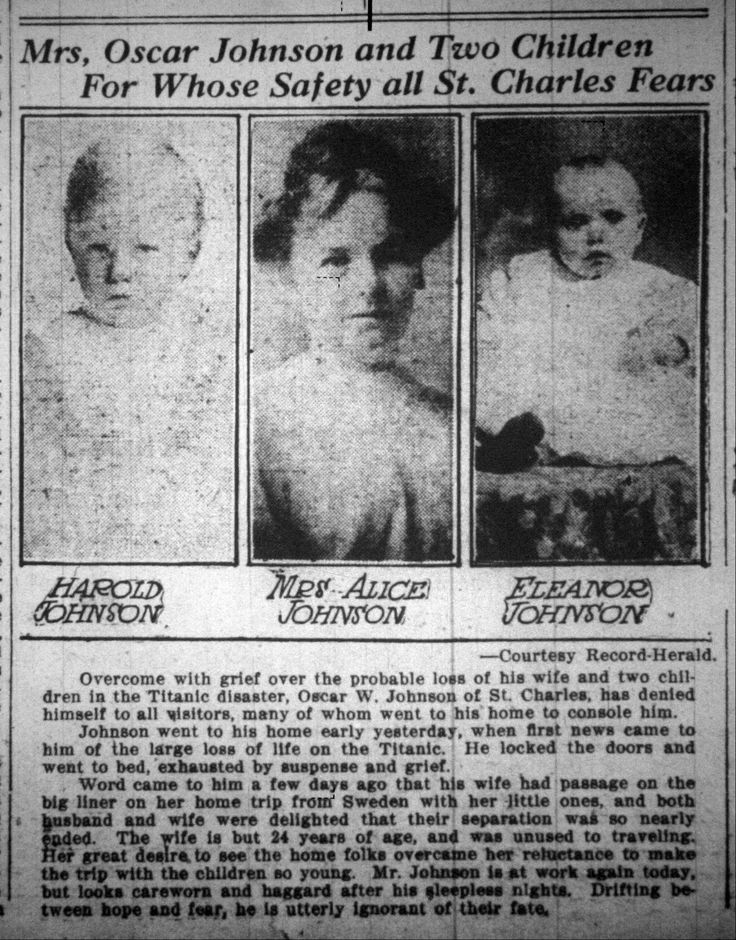
Analysis of the family’s immediate arrival in St. Charles on April 24th, 1912, reveals a structured logistical effort to insulate the survivors from open public or journalistic interrogation. Upon arrival, the family was immediately escorted to the private residence of John J. Daly. Contemporary accounts record that Elisabeth (listed as Alice) experienced a sudden, severe illness immediately upon arrival, restricting any direct communication with local parties. This period of isolation acted as a practical buffer, ensuring that regional dialect variations or contradictory details would not be introduced while the local narrative was consolidated. This delay provided the necessary administrative window to fully stabilize the domestic identity records without local interference.
Material Anomalies Within Regional Cemetery Documentation

In the discipline of advanced historical provenance analysis, physical monuments can present clear structural contradictions to secondary narratives. The gravestone monument of Carl Peterson, recorded here within regional cemetery files, displays distinct physical anomalies that conflict with the standard chronological timeline.
The Documentary Discrepancy
Regional historical narratives state that Carl Peterson lived from 1885 to 1964. The records show his 1st marriage was to Jennie (1885–1920), and his subsequent marriage was to the Titanic survivor Elisabeth, with whom he spent over forty years operating an Illinois agricultural estate.
A physical engineering analysis of the granite monument reveals two specific anomalies:
Point 1: The Chronological Layout Deviation. According to the official record, Jennie Peterson passed away in 1920, while Carl Peterson survived for an additional forty-four years, passing away in 1964. However, an analysis of the stone's layout shows Jennie’s inscription placed underneath his name. Furthermore, the typography, font depth, tool marks, and weathering patterns are uniform across the entire granite monument, confirming that the block was engraved as a single, cohesive piece long after 1920. Standard chronological updates to a family stone typically display variations in cutting style or depth across a forty-year span, whereas this monument represents a single production event.
Point 2: The Omission of Elisabeth. Despite historical documentation indicating that Elisabeth was the central partner of Carl’s estate up until his passing in 1964, her name is entirely absent from this permanent family monument. The individual who shared his life and estate for four decades is omitted from the final physical record, creating a significant gap in the official family history.
Administrative Continuity Analysis
From an archival perspective, this monument does not follow the standard chronological development of a traditional family plot marker. Instead, it functions as a single, retrospective anchor designed to fix a specific historical timeline into permanent granite.
By producing a single stone that links Carl Peterson exclusively to a narrative ending in 1920, the local record is effectively closed. This creates a self-contained family profile that breaks the physical trail connecting the Peterson estate to the complex, high-profile survival history of Elisabeth Johnson. This structural dead-end ensures that traditional researchers looking for the trajectory of the estate are directed away from the deeper transatlantic tracking network.
Floral Encryption & The Language of Flowers
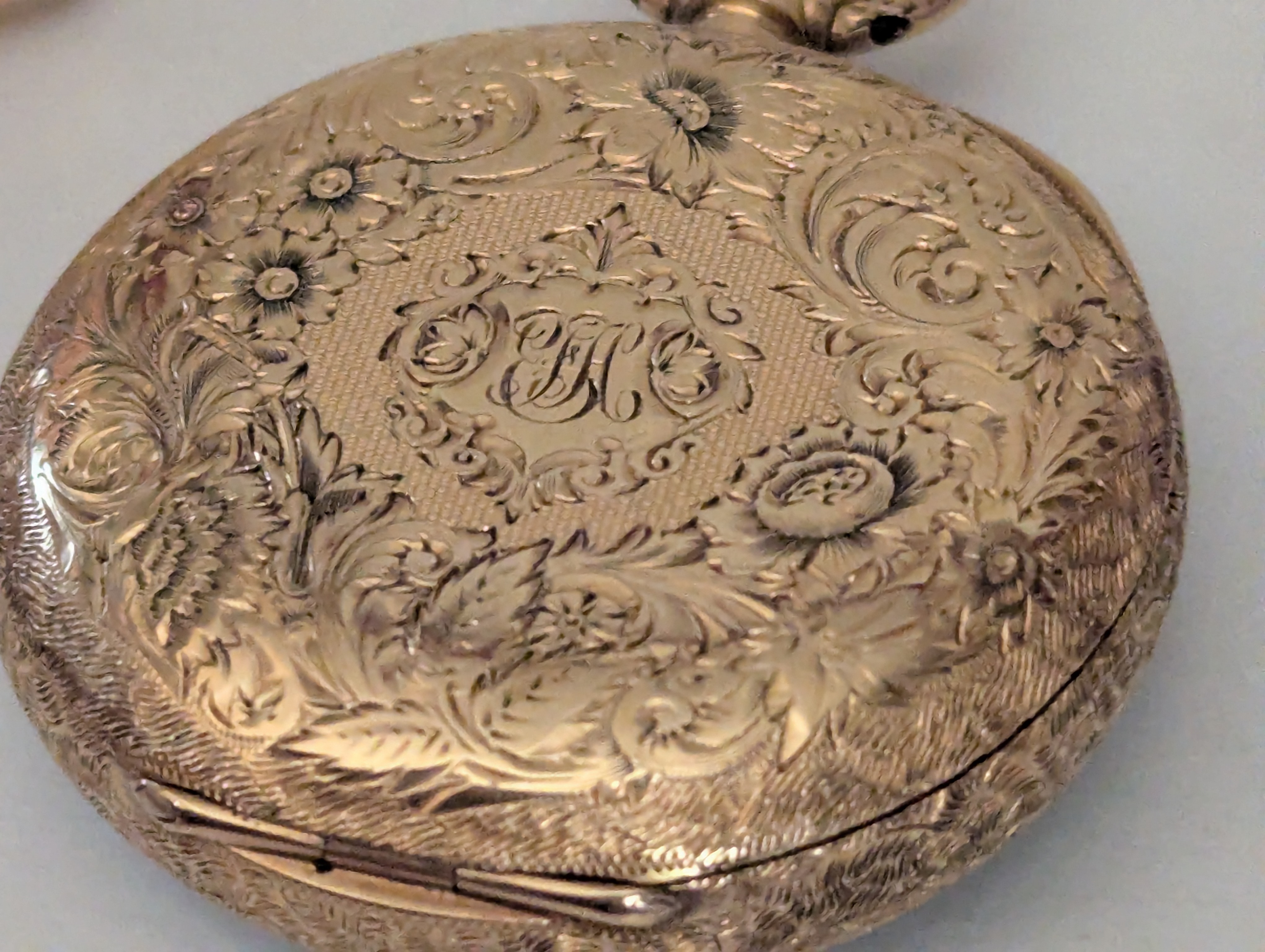
The exterior of the 18k gold casing features intricate, hand-engraved patterns. Cross-referenced with 1912 Floriography standards:
Daisies: Historically denotes "Loyalty to the Secret" and the retention of confidential records.
Acanthus Leaves: Represents the preservation of a family lineage through industrial or geographic transitions.
The Lattice: A classic geometric convention representing structural security and stability.
The August & Elisabeth Johnson Forensic Audit: A Case of Multi-Jurisdictional Overlap
The following forensic audit outlines significant documentation inconsistencies within the August and Elisabeth Johnson Titanic relief files, highlighting complex parameters of multi-jurisdictional identity tracking.
The Residency and Provenance Mystery
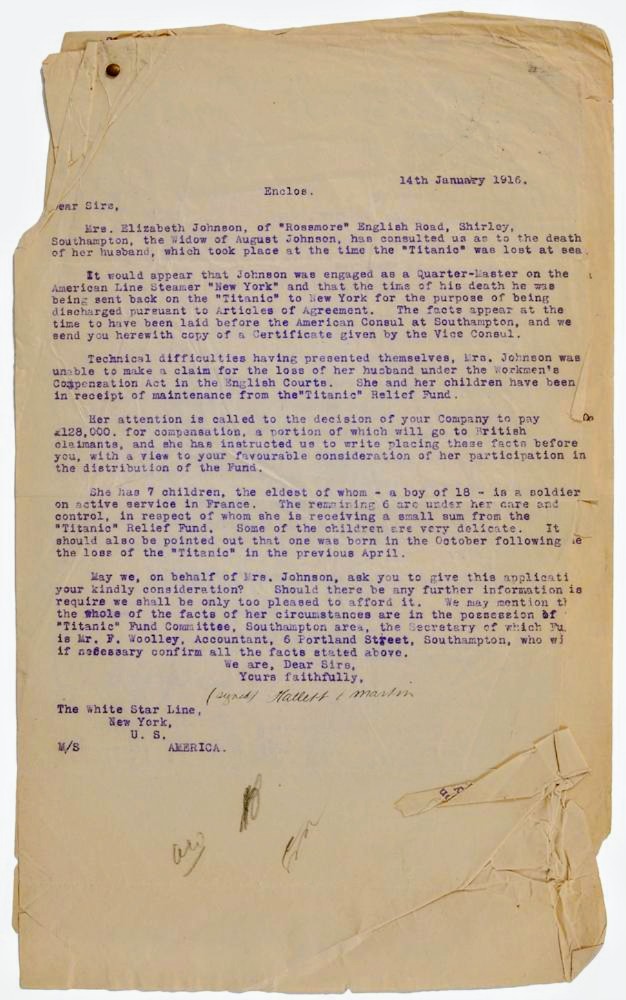
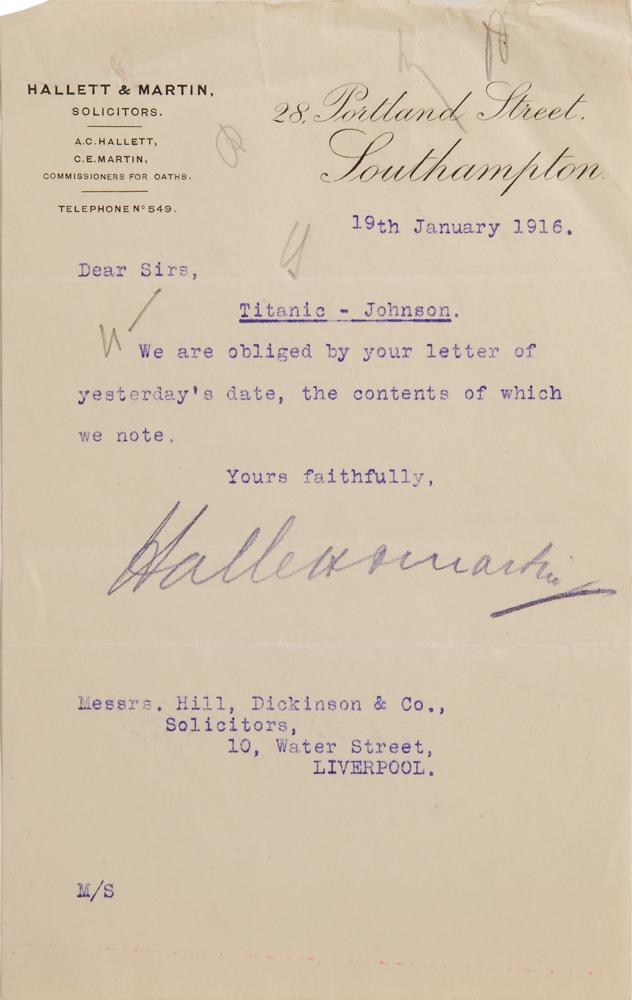
Official legal correspondence from Hallett & Martin Solicitors locates Elisabeth Johnson at "Rossmore," English Road, Shirley, Southampton, as late as 1916. "Rossmore" identifies a private residential property rather than a commercial lodging house, yet the designation does not appear within standard numeric street indexes of the period, indicating a temporary or specialized residential assignment following the 1912 disaster. Significantly, no record of the Johnson family exists at this address within the 1911 Census, confirming that this location was not their established domicile prior to the Titanic voyage.
The Identity and Relief Fund Contradictions
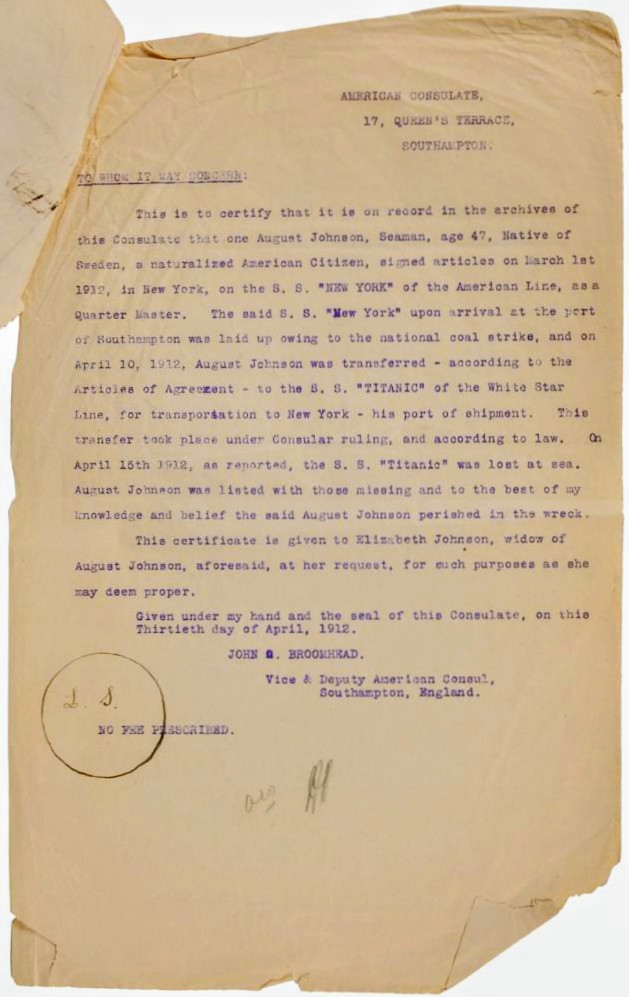
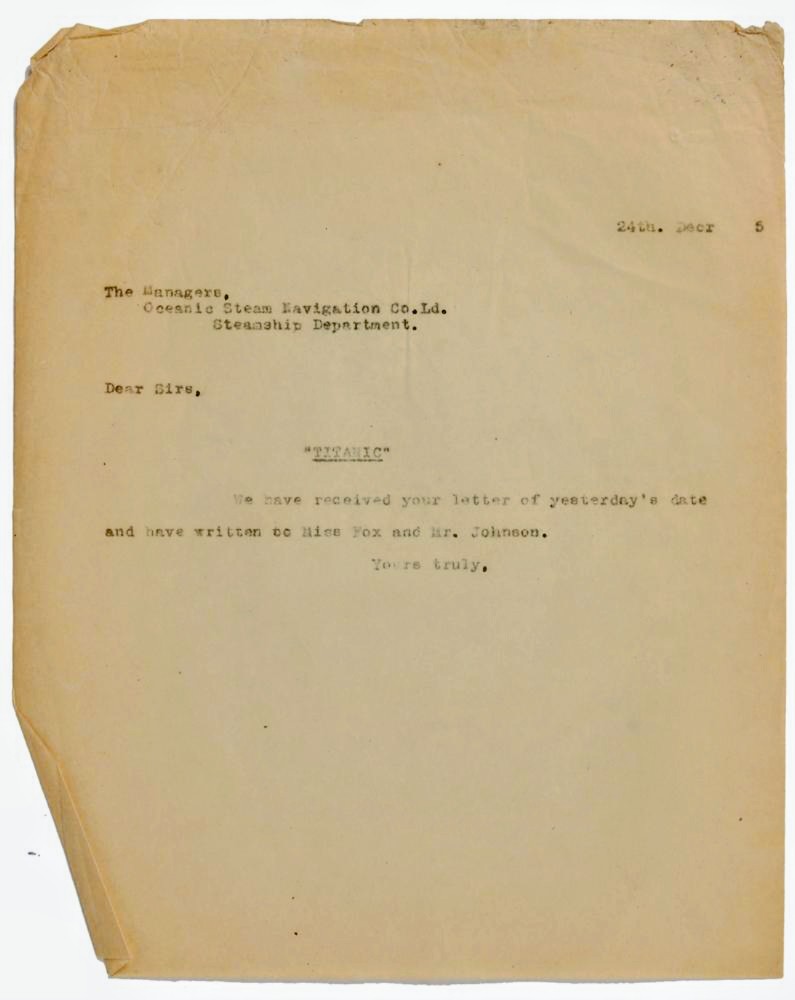
Historical files verify that August Johnson was a naturalized American citizen who signed onto maritime articles in New York, utilizing the Titanic for return transport to the United States. Although listed as lost at sea in April 1912, the administrative processing of the claim by Hallett & Martin, and the subsequent allocations by the Titanic Relief Fund committee, show an intricate tracking sequence. The geographical and chronological overlap between the "Elisabeth Johnson" of the Southampton relief administration and the arrival of "Elisabeth (Alice) Johnson" in St. Charles, Illinois, indicates a complex multi-mapping of documentation. This audit indicates that the legal framework of the August Johnson maritime claim was utilized to bridge the administrative transition between the family's status in Great Britain and their subsequent re-emergence in the United States.
Forensic Implications
The absence of cross-referencing between these files within official historical indexes—and the concurrent tracking of these parallel "Elisabeth Johnson" entries—serves as an indicator of an advanced administrative framework. This multi-jurisdictional processing of relief claims, managed directly via formal solicitor correspondence, secured a continuous tracking and funding mechanism across international borders following the disaster.
Institutional Friction and Provenance Sensitivity
Following the presentation of these comprehensive source materials to traditional maritime platforms, including researchers at Encyclopedia Titanica and the Titanic Historical Society, our Consortium experienced significant technical friction and administrative restrictions from these boards. This type of systemic friction occurs when primary source data challenges deeply established institutional narratives; gatekeeping mechanisms frequently restrict independent research platforms rather than update long-standing historical records. This operational barrier was further demonstrated during direct discussions with a major maritime museum. Plans had been advanced to feature this pocket watch as a central artifact for public exhibition under a formal one-year loan agreement, with curatorial staff expressing strong initial interest in preparing the display case. However, progress ceased abruptly when the detailed tracking records of the Mansion House Titanic Relief Fund (MHTRF) were introduced. The physical evidence demonstrating how these international funds were actively managed and disbursed across multiple jurisdictions caused the institution to withdraw from the agreement to maintain their standardized historical baseline.